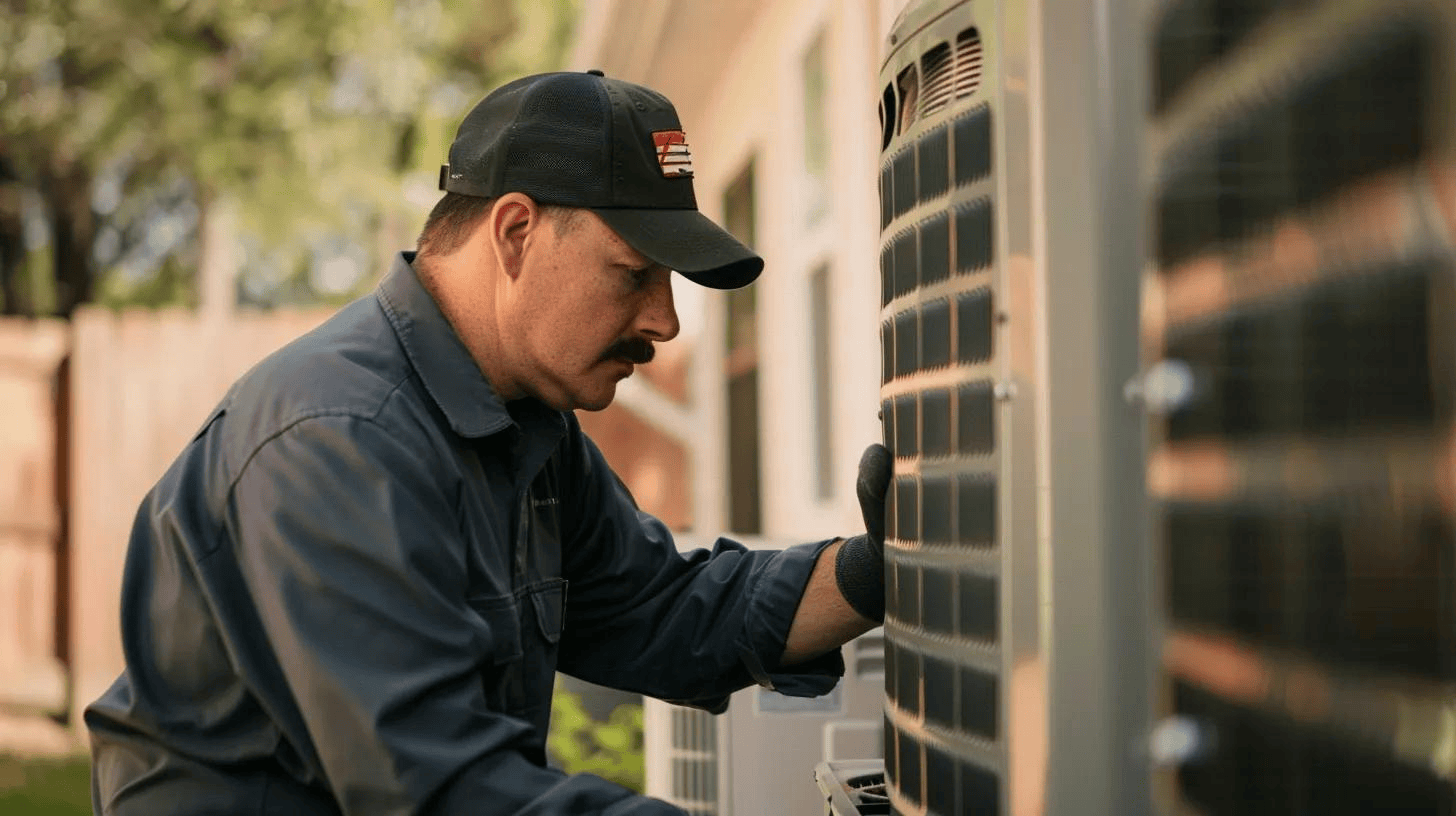
Improving your heater system's efficiency reduces your monthly energy bills while keeping indoor comfort consistent and reliable. This article explains what heater efficiency means, why it matters for lowering heating costs, and how targeted actions — from simple filter changes to system upgrades — produce measurable savings. You'll learn practical maintenance steps, thermostat strategies, insulation and duct-sealing tactics, and when upgrades like high-efficiency furnaces or heat pumps make economic sense. The guide also covers smart thermostat features, a recommended maintenance schedule, and when to book a professional HVAC energy audit to identify hidden losses. Throughout, key phrases like lower heating bill, heater efficiency, HVAC energy audit, and Day & Night energy efficient HVAC are used to help homeowners recognize both quick wins and longer-term investment choices.
Heater efficiency is the ratio of useful heat delivered to the energy consumed, and small changes in air flow, control, and envelope tightness can reduce system runtime significantly. Improving airflow, tightening ductwork, optimizing thermostat schedules, and ensuring combustion or heat-exchange components operate correctly are primary mechanisms to reduce fuel or electricity use. The specific benefit is lower heating costs expressed as percentage reductions in runtime and annual energy spend, making each tip both actionable and measurable. Below are high-impact, practical steps that homeowners can follow to lower heating bills while maintaining comfort.
The most effective efficiency tips include the following immediate and low-cost actions:
These steps target airflow, control, and envelope losses, which together address the three main reasons heaters run longer than necessary. Implementing these tips sequentially—airflow fixes, thermostat optimization, then envelope improvements—produces compounding savings and prepares the home for any needed equipment upgrades.
Regular furnace maintenance restores design performance by cleaning and adjusting the parts that directly affect heat transfer and airflow. Tasks such as replacing filters, inspecting and cleaning burners or heat exchangers, lubricating moving parts, and verifying blower motor performance reduce resistance and improve combustion or heat-pump operation. The result is lower energy use per delivered Btu and fewer cycling events, which translates into measurable drops in fuel or electricity consumption. Routine inspections also catch early wear or safety issues—like cracked heat exchangers or corroded connections—preventing efficiency loss and hazardous failures. Keeping a maintenance log of service items and observed performance changes helps homeowners track improvements and supports warranty or financing conversations with providers.
Smart thermostats reduce wasted runtime by combining scheduling, learning algorithms, and remote control to match heating output to occupant patterns and weather conditions. By automatically setting setbacks, using geofencing or occupancy detection, and optimizing cycles around predicted temperature changes, these devices can lower annual heating energy by 8–15% in many homes. Smart units also integrate with multi-stage furnaces and heat pumps to manage staging, which reduces short-cycling and improves overall system COP or AFUE utilization. For complex zoned systems or older wiring, professional installation ensures accurate sensor placement, proper wiring to control boards, and correct integration with existing HVAC strategies. Homeowners should prioritize models that explicitly support multi-stage equipment and zoning to capture the largest efficiency gains.
The integration of smart thermostats with heat pumps, particularly those with variable speed drives, has presented challenges due to differing control requirements.
Smart Thermostats and Heat Pumps: Optimizing Home Heating Control
Advanced, colorfully-graphic touch-screen thermostats entered the market over ten years ago, providing a much-needed improvement to the control of home heating and cooling systems. And in the last few years, climate change mitigation concerns and rebates from the Inflation Reduction Act (IRA) have accelerated heat pump installations in homes across U.S. But the relationship of smart thermostats to typical air source heat pumps (ASHP) has been rocky at best: ASHPs with variable speed drives require a deeper integration with a thermostat, and most third-party smart thermostats have step-level staged control. Proprietary thermostats that come with the ASHP units are typically not as easy to understand and use as the popular smart thermostats on the market. Moreover, heat pumps with supplemental electric resistance heating require a different control approach that respects the lower temperature/long cycle heat transfer of heat pumps and understands the impact on the electrical grid, es
To encourage website visitors to contact Baeza's Heating & Cooling for service appointments, quotes, or emergency repairs.
Reducing heating costs often begins with behavioral changes and low-cost envelope improvements that lower demand before touching major equipment. Strategies such as modest thermostat setbacks, targeted zone heating, and daytime solar gain capture reduce total heating load while keeping occupants comfortable. These approaches work because they lower the peak and average heat demand, so the heater cycles less frequently and operates closer to its most efficient range. Below are practical, ranked tactics homeowners can implement immediately to see reductions on their next heating bill.
Recommended, low-effort thermostat and behavioral adjustments include:
Applying these strategies together reduces overall heat demand and complements technical fixes like duct sealing and insulation upgrades. By combining behavioral shifts with envelope repairs, homeowners create a lower baseline load that might allow smaller equipment or deferred upgrades.
Optimal thermostat setpoints balance comfort and savings by reducing conditioned setpoints when occupancy and activity are low. A commonly recommended schedule is 68°F while occupied and awake, 62–64°F when sleeping or during extended absences, and setting longer setback periods for vacation to maximize savings. The U.S. Department of Energy and ENERGY STAR guidance supports these ranges and notes that each degree of setback can yield incremental savings. For homes with multi-stage or zoned systems, setpoints should be adjusted room-by-room rather than using a single whole-house target—this prevents overheating one area while another remains cold. Implementing these settings with a programmable or smart thermostat automates the schedule and removes human error, ensuring savings persist over time.
Insulation and duct sealing reduce the heat lost through walls, attic, windows, and ductwork, which directly lowers the energy the heater must supply. Typical loss points include attic bypasses, leaky recessed lights, uninsulated knee walls, and poorly sealed trunk ducts in crawlspaces or attics. Diagnostic steps—such as a visual inspection, simple smoke tests around leaks, and professional blower-door and duct-leakage testing—identify where upgrades provide the best ROI. Sealing ducts can improve delivery efficiency by 10–30% in leaky systems, while adding attic insulation reduces conductive losses and shortens heater cycles. Professional crews can implement robust air-sealing and insulation solutions to capture these savings and improve indoor comfort balance.
Upgrading to energy-efficient heating systems reduces operating costs, improves comfort, and often lowers emissions from combustion-based heating. Higher AFUE furnaces and modern heat pumps with strong COP/HSPF ratings convert a larger share of input energy into usable heat, reducing annual fuel or electricity consumption. Beyond energy savings, efficient systems commonly provide quieter operation, better temperature control, and longer useful life when properly installed and maintained. The following comparison table helps homeowners weigh furnace, heat pump, and boiler characteristics to choose the best upgrade path for their climate and usage pattern.
Below is a concise comparison of common upgrade options and expected outcomes.
*Estimated savings vary by climate, fuel price, and home envelope.
This table shows high-efficiency systems reduce the delivered cost of heat and may change replacement timing—choosing the right system requires matching performance metrics to local climate and usage. In colder climates, high-AFUE combustion systems and cold-climate heat pumps offer different trade-offs; proper sizing and matched-system installation maximize realized savings.
High-efficiency furnaces save fuel by improving combustion control, heat-exchanger design, and reducing fan power through ECM blowers, which lowers fuel and electricity consumption per delivered Btu. Heat pumps save energy by moving heat rather than generating it, improving seasonal performance metrics like HSPF and COP; modern inverter-driven compressors maintain higher efficiency across varying loads. The practical effect is less on/off cycling, steadier indoor temperatures, and lower peak demand charges where applicable. Example calculations use local heating degree days and fuel prices to translate AFUE/COP improvements into annual dollar savings, helping homeowners compare lifecycle costs rather than just upfront price. Correct sizing and ductwork condition are essential—oversized equipment can negate efficiency gains through excessive cycling.
Day & Night systems are positioned as energy-efficient options when paired with certified installation practices and proper system matching, delivering performance consistent with their rated efficiency. As an Elite Dealer for Day & Night equipment, local technicians can access matched components and warranty support that help preserve efficiency over the system's life. Financing options and strong parts-and-labor warranty coverage reduce upfront cost barriers and protect the homeowner's investment in efficiency. Selecting a trusted equipment brand and ensuring certified, matched installation are both critical to converting rated efficiency into real-world savings and reliability.
To encourage website visitors to contact Baeza's Heating & Cooling for service appointments, quotes, or emergency repairs.
Regular maintenance follows a predictable schedule that targets the parts of your system most likely to reduce efficiency when neglected. Simple homeowner tasks combined with annual professional inspections keep airflow and combustion systems performing near rated efficiency. The following recommended schedule clarifies intervals for filters, professional tune-ups, and targeted inspections so homeowners know what to do and when to call a technician.
This schedule balances simple homeowner tasks with periodic professional attention to prevent efficiency loss and costly emergency repairs. Following it maintains warranty requirements for many manufacturers and supports predictable operating costs over time.
A professional tune-up is a structured set of diagnostic and corrective actions that restore system performance and verify safe operation. Typical steps include inspecting and cleaning burners or heat-exchange surfaces, testing combustion and venting where applicable, checking and replacing filters, measuring airflow and static pressure, and calibrating thermostats and controls. Technicians also inspect electrical connections, lubricate moving parts, and test safety interlocks to prevent failures that cause efficiency loss. The documented outcomes of a tune-up commonly include measured performance metrics and recommendations for next steps, which help homeowners prioritize repairs or upgrades.
Preventive maintenance prevents efficiency loss by addressing wear, dirt, and drift in system components before they cause performance degradation or failure. For example, a clogged filter increases blower energy and shortens equipment life, while uninspected burners can develop soot or corrosion that reduces heat transfer. Regular maintenance reduces emergency repair frequency, extends equipment lifespan, and stabilizes operating costs, often outweighing the cost of planned service over the life of the unit. A documented maintenance history also supports warranty claims and can provide evidence of care when evaluating replacement timing or resale value.
Smart thermostats provide precision control, adaptive scheduling, and integration with other home systems to align heating output with actual needs. By learning household patterns, using weather compensation, and enabling remote control, they reduce unnecessary runtime while maintaining comfort during occupied periods. Integration with zoning systems and multi-stage equipment allows smart thermostats to coordinate staged operation, improving both efficiency and comfort balance. Below is a feature-to-benefit comparison that clarifies which capabilities drive the most savings and when professional setup matters.
The following table compares smart thermostat features and their typical energy impact.
These features, when properly configured, complement envelope and equipment upgrades by ensuring the system runs only as needed and at efficient operating points. Pairing a smart thermostat with well-sealed ducts and tuned equipment produces the best practical results.
Homeowners should prioritize smart thermostats that support learning or programmable scheduling, multi-stage equipment compatibility, zoning capability, and reliable remote access. Learning algorithms simplify long-term use by reducing manual schedule creation and adapting to changes, while geofencing ensures setbacks engage when the home is unoccupied. Compatibility with multi-stage furnaces and heat pumps is critical to prevent control conflicts and to capture staging efficiency gains. Remote diagnostics and usage reporting provide insight into runtime patterns and help technicians tune schedules for maximum savings. For homes that require special setups—older control wiring, hydronic systems, or third-party zoning—professional installation avoids integration errors that reduce expected benefits.
Enhancing your heater system's efficiency not only leads to lower energy bills but also ensures consistent indoor comfort throughout the colder months. By implementing practical maintenance tips, utilizing smart thermostats, and considering energy-efficient upgrades, homeowners can achieve significant savings and improved system performance. Don't wait to start your journey towards a more efficient heating system; explore our expert services and solutions today. Contact Baeza's Heating & Cooling for personalized advice and assistance in optimizing your home's heating efficiency.